
When a bathroom layout forces you to work with an awkward corner or an uneven wall, a standard rectangular vanity often leaves dead space or looks cramped. An L-shaped bathroom vanity solves that puzzle by wrapping around the corner, turning wasted square footage into usable storage and counter space. Whether you’re cramped in a small powder room or carving out a spa-like ensuite in a larger home, L-shaped vanities offer the kind of practical elegance that makes a bathroom feel both bigger and more functional. This guide walks you through what these vanities are, why they might be the right choice for your space, and how to choose and install one that’ll serve your home well.
Table of Contents
ToggleKey Takeaways
- An L-shaped bathroom vanity wraps around corners to convert dead space into 40–60% more storage and usable countertop than a standard single-wall unit.
- L-shaped vanities come in modern minimalist, transitional, farmhouse, and industrial styles, with countertop options ranging from budget-friendly laminate to luxury marble.
- Accurate plumbing rough-in measurements and proper wall stud verification are critical before installation to avoid costly relocations and functional issues.
- These vanities make small or medium bathrooms feel larger by distributing visual weight around the space rather than anchoring everything to one wall.
- Professional countertop seaming and licensed plumber connections are essential for preventing water damage and ensuring long-term durability of your L-shaped vanity.
What Is an L-Shaped Bathroom Vanity?
An L-shaped bathroom vanity is a cabinet system that runs along two adjacent walls, forming an L footprint. Unlike a standard single-wall vanity, it typically features a main run (often 36 to 60 inches long) along one wall and a perpendicular wing (usually 24 to 36 inches) extending into the corner. Some designs include two separate sinks, while others have a single centered or offset sink with countertop workspace on both sides.
The cabinet itself is built from the same materials as traditional vanities, plywood or MDF base, finished with veneer or painted cabinetry, and mounts to wall studs (usually a double stud at the corner for added support). The countertop typically runs continuously across both legs, whether it’s laminate, engineered quartz, marble, or solid-surface material. Plumbing and drainage are routed through the cabinet base to reach the wall or floor, depending on your existing rough-in location and local code requirements.
Why Choose an L-Shaped Vanity for Your Bathroom?
Space and Storage Benefits
Corners are dead zones in most bathrooms, they collect clutter or sit empty. An L-shaped vanity claims that corner and adds 40 to 60 percent more storage and countertop real estate than a comparable single-wall unit. If you’re storing everything from hair tools to skincare bottles, the extra surface space eliminates counter clutter. The wing can hold a second sink for dual-user mornings, or you can use it purely for counter staging, with drawers and shelving below for towels, cleaning supplies, and cosmetics.
In small or medium bathrooms (under 100 square feet), an L-shaped layout also makes the room feel less boxy. It breaks up the monotony of a straight shot from door to toilet and distributes visual weight around the space rather than anchoring everything to one wall.
Design Flexibility and Aesthetic Appeal
L-shaped vanities come in virtually every finish and style. A sleek white lacquered base with a matte white quartz top reads modern and spa-like. A warm walnut or whitewashed oak cabinet with marble creates a farmhouse or transitional vibe. Tile or shiplap applied to the wall behind the vanity adds texture without eating floor space. When paired with a corner mirror or frameless glass enclosure, the L-shape actually makes a small bathroom appear larger by drawing the eye around the perimeter rather than stopping it at one wall.
Design flexibility also comes from configuration. Some homeowners place the longer leg along the wall with the entry door and the shorter leg along the window wall, creating a balanced look. Others extend one leg nearly the full length of one wall and keep the corner wing modest, depending on traffic flow and how much dual-sink functionality they need.
Popular L-Shaped Vanity Styles and Materials
Modern Minimalist: Think handle-free cabinetry, soft-close drawers, and a thin-edge quartz or engineered-stone countertop in white, gray, or warm gray. These vanities are clean-lined, often paired with flat-panel doors and integrated LED under-cabinet lighting. Material choices emphasize durability and low maintenance.
Transitional: A warm-toned wood base (maple, oak, or walnut) with a marble or waterfall-edge quartz top bridges traditional and contemporary. Paneled or shaker-style doors, metal or leather handles, and brass or brushed-nickel fixtures are standard. This is the most versatile style for existing homes because it complements both older and newer design elements.
Farmhouse/Rustic: Reclaimed or distressed wood, a butcher-block or natural stone countertop, and open shelving on the corner wing. These vanities often pair with vintage-style fixtures (cross-handle faucets, pedestal elements) and subway tile or shiplap backing.
Contemporary/Industrial: Concrete, matte-black metal frames, or stained plywood with a brushed-steel sink and minimalist faucet. Often found in lofts or urban homes, these designs embrace raw materials and functional hardware.
Material-wise, quartz or engineered stone is the practical choice, it resists staining, requires minimal sealing, and costs $60–$150 per square foot installed. Marble and granite demand more upkeep but deliver luxury: they run $80–$250+ per foot. Laminate is budget-friendly ($30–$50 per foot) but less durable. Solid-surface materials (Corian, Avonite) are waterproof, repairable, and mid-range in cost.
Browse design galleries on Houzz or curated renovation inspiration on Remodelista to anchor your style preference before shopping for a specific vanity.
Installation Tips for a Flawless Finish
Prep Work Is Everything
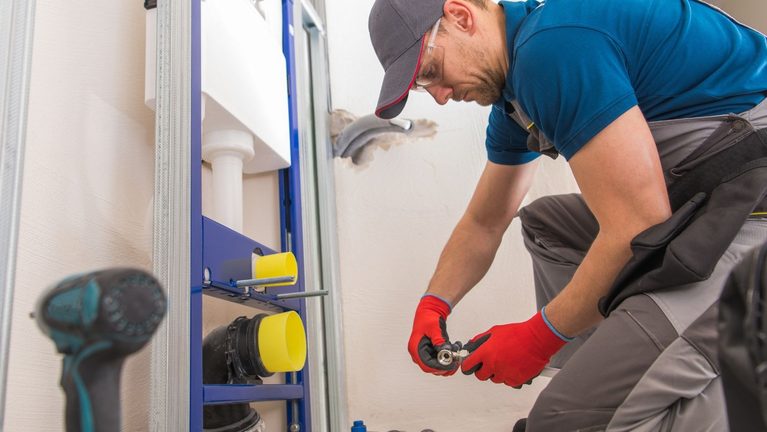
Before the vanity arrives, confirm your plumbing rough-in location. Most vanities are designed for a 3.5-inch center-line measurement from the back wall to the drain, but yours might differ based on your home’s original setup. If your rough-in doesn’t match, you’ll need to relocate drain lines, a plumbing job that usually requires a permit and a licensed plumber. Measure twice here: moving plumbing after the vanity is installed costs money and headaches.
Verify the wall studs behind both legs of the L-shape using a stud finder. Mark them clearly. The vanity cabinet needs to mount securely to at least two studs per leg, and ideally a doubled-up stud or blocking at the interior corner where the two runs meet. If your walls are uneven (and older homes often are), use shims or a laser level to ensure the top edge sits perfectly horizontal. Uneven installation causes doors and drawers to stick and undermines the appearance of an otherwise beautiful piece.
Countertop Installation
Once the cabinet is mounted and level, the countertop goes down. If it’s a single continuous top, the installer or fabricator seams it at the corner with epoxy or polyester resin, matching the finish. This is not a DIY step unless you’re experienced with countertop work, a poor seam shows immediately and can allow water infiltration. Laminate or solid-surface tops can sometimes be joined on-site with biscuits and adhesive, but marble and stone demand professional templating and seaming.
Plumbing Connections
Supply lines (hot and cold water) run up from the wall or floor and connect to the faucet rough-in. Use braided stainless-steel supply lines (not older rubber hoses) and ensure shutoff valves are accessible and in good working order. The drain trap and tailpiece route under the sink into the wall or floor rough-in. Seal all penetrations with silicone caulk, not plumber’s putty, to prevent water damage to the cabinet base.
For a dual-sink L-shaped vanity, plumb both sinks to the same rough-in or to separate lines, depending on your home’s drainage layout. Again, this is a job for a licensed plumber in most jurisdictions if structural changes are involved.
Finishing Touches
Caulk all seams where the countertop meets the wall backsplash and where the cabinet sides meet the walls. Use paintable or colored silicone caulk appropriate to your materials. Avoid grout in wet areas: it cracks and absorbs water. Install the faucet, handles, and any decorative hardware according to the manufacturer’s specs. For a polished look, add global design inspiration from Homify to source tiles, lighting, or accessories that complement your new vanity. Finally, run your faucets and check for leaks under the cabinet and at all connections before you call the job complete.
Conclusion
An L-shaped bathroom vanity is a smart investment if you’re working with a corner layout, need extra storage, or want to elevate a bathroom’s functionality and style. The combination of dual counter space, smart storage, and design flexibility makes these vanities popular across modern, farmhouse, and transitional homes. Success depends on careful planning, accurate measurements, quality materials, and proper installation, but the payoff is a bathroom that works harder and looks better every day. Start with your style preference and rough-in location, then work with a qualified fabricator and plumber to bring the design home.