
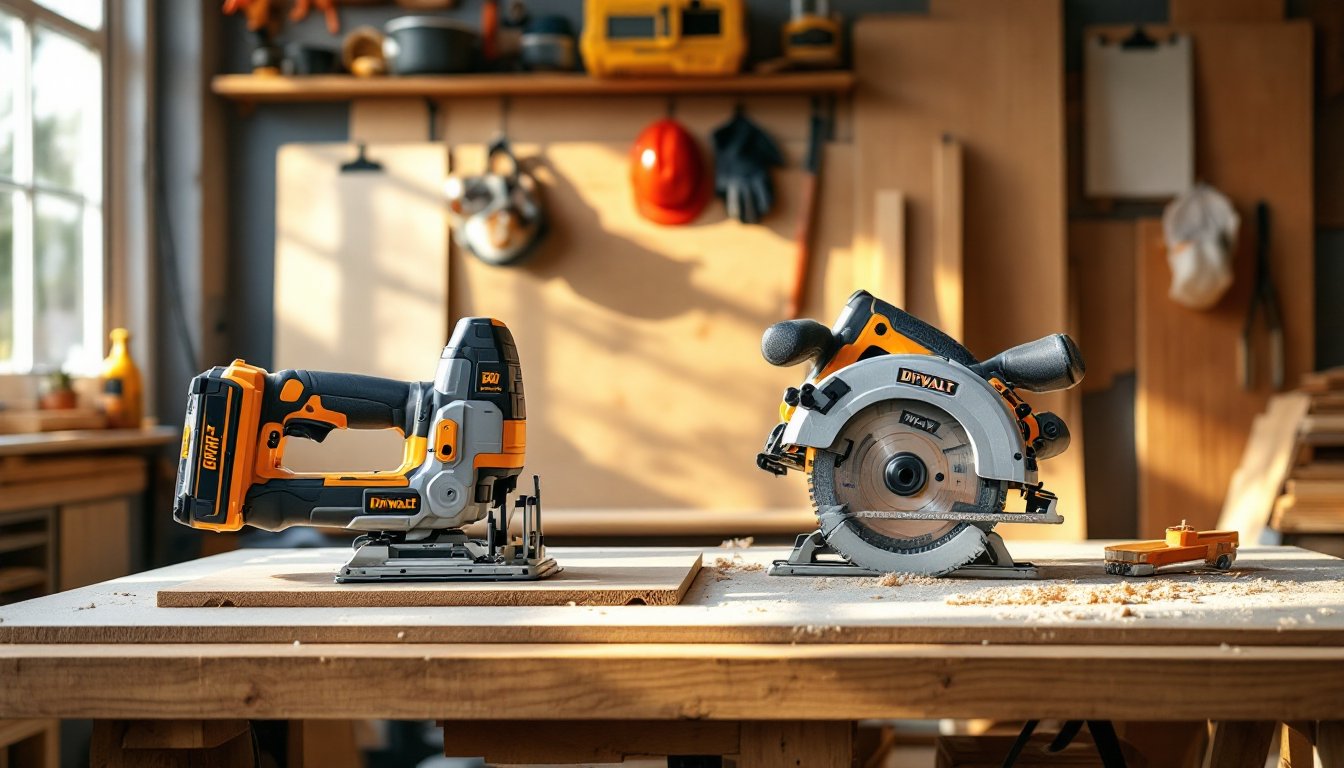
Picking the right saw can make or break a DIY project, and your weekend plans. A jigsaw and a circular saw are two of the most common power saws in a home improvement toolkit, but they’re built for completely different jobs. Understanding which tool handles curved cuts, which rips through long boards, and when you actually need both will save you frustration, money, and probably a few trips back to the hardware store. This guide walks you through the strengths, limitations, and ideal uses of each saw so you can confidently grab the right one for your next project.
Table of Contents
ToggleKey Takeaways
- A jigsaw excels at cutting curves, notches, and intricate shapes with its reciprocating blade, while a circular saw dominates straight cuts and ripping long boards with its spinning blade at high speed.
- Circular saws are faster and more versatile for general framing and deck building, making them the better first investment for most DIY toolkits at an affordable price point.
- Jigsaws are ideal for interior trim work, plunge cuts, and detailed carpentry on materials like plywood and MDF, but struggle with thick hardwood beyond 1½ inches.
- A circular saw vs jigsaw choice depends on your project type: buy a circular saw first for rough carpentry, then add a jigsaw once you tackle interior work requiring precision.
- Proper blade selection and safety practices are critical—use 40-tooth blades for framing and 60-tooth blades for finish work, always unplug before changing blades, and wear safety gear including gloves and hearing protection.
- Owning both tools gives you maximum flexibility: pair them from the same brand to share cordless battery systems and handle nearly any home improvement project efficiently.
Key Differences Between Jigsaws and Circular Saws
Blade Design and Cutting Motion
A jigsaw uses a short, straight blade that moves up and down (reciprocating motion) at roughly 500–3,000 strokes per minute, depending on the model. That oscillating blade makes it nimble and precise for curves, angles, and intricate work. The blade is held in a chuck at the top of the tool, and the entire shoe (the flat base) glides along the workpiece.
A circular saw has a round blade (typically 7¼ inches in diameter for standard models) that spins continuously at high speed, around 4,000–6,000 RPM. It’s pushed forward through the material, making straight cuts. The blade diameter and the depth-of-cut adjustment determine how thick a board you can slice through in a single pass.
Think of it this way: a jigsaw is a scalpel, and a circular saw is a machete. The jigsaw excels at detail and finesse: the circular saw dominates on speed and power for straight cuts. Both are essential to different kinds of work.
Best Uses for a Jigsaw
Jigsaws shine when you’re cutting curves, notches, and irregular shapes. If you’re cutting a circular opening for a recessed light, trimming around door frames, or creating decorative edges on shelving, a jigsaw is your tool. It’s also ideal for plunge cuts, starting a cut in the middle of a board without a pilot hole, useful when you need to carve out an access panel or cut around existing fixtures.
They’re excellent for cutting plywood, MDF, and laminate without excessive tearout (though backing with painter’s tape helps). A jigsaw can also handle thin metals, plastics, and hardwoods if you use the right blade and speed. Because the blade is small and the motion is controlled, there’s less kickback risk than with a circular saw, making jigsaws safer for one-handed operation on certain cuts.
The downside? Jigsaws are slow for ripping long boards and struggle with thick material beyond about 1½ inches, especially hardwood. A jigsaw can cut a 2×4, but it’ll burn through battery life and test your patience. For production speed and repeatability on straight cuts, they fall behind. If you’re frame building, decking, or doing repetitive rip cuts, you’ll want something faster. Several experienced DIYers note that a jigsaw ranks among the first power tools worth owning, especially for interior trim and detailed carpentry.
Best Uses for a Circular Saw
Circular saws are the speed demons for ripping lumber, crosscutting boards, and breaking down sheet goods. If you’re framing a wall, building a fence, installing subfloor, or cutting multiple 2x4s to length, a circular saw gets the job done fast. A 6-inch blade works for thin stock: a standard 7¼-inch blade rips through 2-inch lumber and cuts sheet goods cleanly.
They’re portable, affordable, and require minimal setup, just mark a line, align the blade, and push. Many DIYers prefer circular saws for job-site work because they’re lighter than miter saws and don’t require a dedicated work surface. You can crosscut a 2×12 in seconds or cut a 4×8 sheet of plywood with guide rails if you’re doing repetitive cuts.
Circular saws do have limitations. Rip cuts (along the grain of a board) are tougher to keep straight without a fence, the saw tends to wander. You can’t cut curves or intricate shapes: attempting a curve usually results in binding, kickback, or a mangled cut. The blade guard and motor overhang make it awkward to cut near edges or fit into tight spaces. Kickback is also a real hazard if the blade binds, always wear safety glasses, hearing protection, and work gloves, keep both hands on the saw, and stand to the side of the blade path, not in line with it. Wood dust is significant, so a dust mask is wise for extended use. Resources like This Old House emphasize proper circular saw technique to avoid injury.
Which Saw Should You Buy for Your DIY Toolkit
If you’re building a toolkit from scratch, buy a circular saw first. It’s more versatile for general framing, decking, and rough carpentry. A budget 20V cordless model from a reputable brand (DeWalt, Makita, Bosch, or Milwaukee) runs $80–150 and covers 90% of straight-cut needs.
Add a jigsaw once you’re tackling interior work, trim, or projects requiring curves. A good cordless jigsaw costs $60–120 and pairs well with your circular saw battery system if you buy the same brand. Both are worth owning, but priorities depend on your project pipeline.
For capacity, consider your typical workload. If you’re ripping lots of thick lumber or hardwood, a worm-drive or sidewinder circular saw offers more power than compact 20V models, though they’re heavier and less maneuverable. If interior trim and furniture projects dominate, a jigsaw might be your bread and butter. Many woodworking project guides recommend having both saws in your shop for maximum flexibility.
Blade choice matters hugely. For a circular saw, use a 40-tooth general-purpose blade for framing (faster, more tear) or a 60-tooth blade for plywood and finish work (slower, cleaner). For a jigsaw, match blade length and tooth count to material thickness and desired finish. A metal-cutting blade for jigsaws is different from a wood blade, they’re not interchangeable. Always unplug or remove the battery before changing blades.
Conclusion
A jigsaw and circular saw aren’t competing tools, they’re teammates. The circular saw handles speed and straight cuts: the jigsaw tackles curves and detail. Start with a circular saw for general work, add a jigsaw when interior trim and curved cuts demand precision, and you’ll be equipped for nearly any home improvement project. Choose cordless models from a single brand to share batteries, prioritize safety gear every time, and your toolkit will grow smarter.