If you’ve ever noticed dust settling on surfaces within hours or noticed stale air lingering in your living space, you’re not alone. Many homeowners struggle with indoor air quality, whether from seasonal allergens, pet dander, or general pollution. An IQ air purifier can make a real difference in how your home feels and the air your family breathes. Unlike generic solutions, IQ models combine Swiss engineering with advanced filtration technology to target specific air quality problems. This guide walks you through what sets IQ air purifiers apart, which models suit different homes, and how to get the most from your investment.
Table of Contents
ToggleKey Takeaways
- IQ air purifiers use HyperHEPA filtration technology that captures particles as small as 0.003 microns—roughly 100 times smaller than standard HEPA filters—combined with activated carbon pre-filters to tackle odors and pollutants.
- Select your IQ air purifier model based on room size and CADR rating rather than marketing claims; the IQ 150 suits small spaces, while the IQ 250, IQ 350, and IQ 450 handle progressively larger homes and higher air quality demands.
- Proper placement is critical: position your IQ unit in a central location at least 12 inches from walls and at breathing-zone height to maximize air circulation and filtration effectiveness.
- Maintain your air purifier by checking the filter indicator regularly, replacing the main HyperHEPA filter every 12–18 months, and cleaning washable pre-filters every 3–6 months to keep it operating efficiently.
- While IQ air purifiers cost $400–$1,200+ upfront plus $150–$250 annually in filter replacements, the long-term investment often pays for itself through better sleep quality, reduced allergy symptoms, and fewer health-related expenses.
What Makes IQ Air Purifiers Stand Out
Key Features and Technology
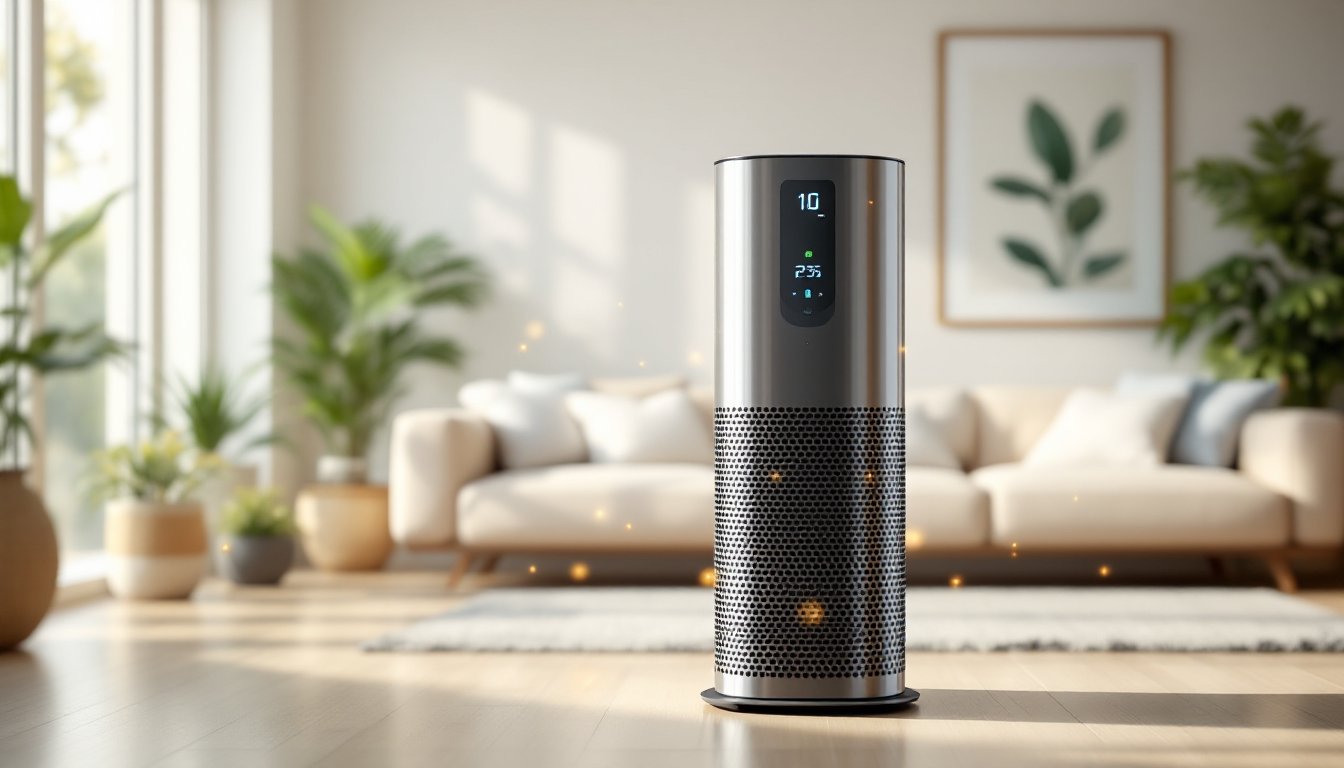
IQ air purifiers aren’t just another box with a fan and a filter. They’re engineered around a few core principles that set them apart from cheaper alternatives. The brand uses HyperHEPA filtration, which captures particles as small as 0.003 microns, that’s roughly 100 times smaller than standard HEPA filters. For reference, a human hair is about 70 microns wide, so you’re catching things the naked eye can’t even see.
Most IQ models include activated carbon pre-filters that handle odors, volatile organic compounds (VOCs), and larger particles before air reaches the main filter. This two-stage approach extends the life of the expensive HEPA layer and handles real-world problems like cooking smells or pet odors that pure mechanical filtration alone can miss. Several units also feature sealed design construction, meaning air can only be purified, not bypass the filter through gaps or loose seals.
The smart features vary by model. Many include air quality sensors that detect particulate matter and gas levels in real time, adjusting fan speed automatically. Some connect to your phone via WiFi, letting you monitor air quality from work or adjust settings remotely. Quiet operation is another selling point: most IQ models run at 25–45 decibels on low speed, roughly the noise of a refrigerator humming in the background.
Testing labs have consistently shown IQ purifiers removing dust, pollen, pet dander, and fine particulates effectively. Recent independent testing of air purifiers demonstrates that sealed HEPA designs with real-time sensors outperform traditional passive units.
Popular IQ Air Purifier Models for Home Use
IQ makes several models scaled to different room sizes and budgets. The IQ 150 is their entry-level unit, designed for bedrooms or small living rooms up to about 200 square feet. It’s compact, quiet on low speed, and includes basic smart features. This model is solid if you want to test whether a quality purifier actually improves your space without a major investment.
The IQ 250 and IQ 350 cover medium and large rooms, roughly 300–400 and 450–600 square feet respectively. These step up the filtration capacity and fan power. If you have a master bedroom or open-concept living area, the IQ 250 is a practical choice. The IQ 350 suits larger homes or spaces with pets where you want more aggressive air cycling. Many homeowners place one unit per floor rather than trying to cover an entire 2,000-square-foot home with a single machine.
For serious air quality needs, the IQ 450 is IQ’s flagship. It’s designed for very large spaces or homes with multiple occupants, allergy sufferers, or significant pet activity. It exchanges the air in a 600+ square-foot room roughly every 20 minutes, which is faster than lesser models. Performance reviews from established tech reviewers consistently rank top-tier sealed models like this among the best for measurable results.
Don’t pick a model based on marketing alone. Measure your target room, check the CADR rating (Clean Air Delivery Rate) on the spec sheet, and match it to your needs. An oversized unit won’t hurt, but undersizing is where people waste money without seeing results.
Installation and Placement Tips for Maximum Effectiveness
Placement makes or breaks how well any air purifier works. You’re not trying to hide it: you’re trying to make it work. Position your IQ unit in a central location where air can flow freely around it, at least 12 inches from walls on all sides is ideal. Kitchen corners, blocked alcoves, or spots behind furniture severely limit how much air the purifier can actually cycle through.
Height matters. Place the unit so its intake isn’t at floor level where it just sucks up dust motes you’d sweep anyway. Waist-high to chest-high placement lets it pull in air from breathing-zone height. If you’re running a bedroom purifier while sleeping, place it on a nightstand or dresser rather than under the bed where air circulation gets strangled.
Keep the purifier away from open windows in heavy pollen seasons. You’re fighting an uphill battle trying to purify air if fresh outside air is flowing in constantly. Close windows when running the unit for maximum effect, even cracked windows can undermine your setup. Don’t run it in one room and leave doors to other rooms open, either. If you need clean air throughout the home, you need multiple units or a central-duct system, which most homeowners don’t have.
Turn it on a few hours before the room is occupied for heavy use days. If allergy season is brutal and you’re coming home from outside, let the purifier run on high speed while you’re at work. The air will be noticeably fresher by evening. Once you’re in the room, you can lower the speed to reduce noise. Smart models handle this automatically if you set them to auto mode.
Maintenance and Filter Replacement Guide
An air purifier is only as good as its filters, and IQ models require real maintenance. Most units include a pre-filter (usually washable or replaceable every 3–6 months) and a HyperHEPA main filter (replacement every 12–18 months depending on use and air quality). Running the unit 24/7 in a dusty home burns through filters faster than running it 4 hours daily in a clean space.
Check your unit’s air quality indicator regularly. IQ models show filter saturation through a light color or an app notification. Don’t ignore this, once the filter is clogged, the unit works harder, uses more energy, and stops cleaning effectively. Waiting until you notice no suction is a mistake: replace the filter when the indicator suggests it, not when the unit stops working.
Before replacing the main filter, clean any washable pre-filters under cold running water. Let them air-dry completely before reinstalling. Never try to “clean” the HyperHEPA filter with water or a vacuum, that damages the fibers. Dispose of used HEPA filters according to local waste guidelines. They’re not hazardous, but some cities have specific collection programs.
Keep the exterior of the unit clean. Wipe down the housing with a soft cloth monthly to prevent dust buildup that can settle back into the room. Check vents and seams for lint accumulation and gently remove it. Most IQ models run quiet, but a blocked vent or dust-clogged casing can make them noisier than they should be. Proper maintenance takes minutes and extends the purifier’s lifespan significantly.
Cost Considerations and Budget Planning
IQ air purifiers aren’t the cheapest option, and that’s worth addressing head-on. Entry-level models like the IQ 150 run around $400–$600, while flagship models like the IQ 450 can exceed $1,200. On top of the initial purchase, you’ll spend roughly $150–$250 per year on replacement filters, depending on your model and usage.
Don’t let price alone drive the decision. A cheap purifier that doesn’t actually clean your air is a bigger waste than spending $700 on a unit that delivers measurable results. Calculate your real cost: initial unit price plus three years of filter replacements divided by usage. A $900 IQ 250 with $200 yearly filter costs over three years is $1,500 total, or about $0.41 per day if running 8 hours daily.
Consider your specific problem. If you’re just managing general dust and want fresher air, an IQ 150 in your bedroom for sleep hours makes sense. If household members have allergies or asthma, or you have pets, the investment in a larger model or multiple units justifies itself through better health outcomes and fewer medical visits. Some homeowners find that improved sleep quality and fewer allergy symptoms offset the equipment cost within months.
Look for seasonal sales or bundle deals if you’re buying multiple units. IQ occasionally discounts older models when new versions release. Verify that your retailer offers straightforward return policies, some units sound loud in-store but feel fine at home, so test returns matter. Trusted retailers carry IQ purifiers with clear warranty information and good support.
Conclusion
An IQ air purifier is a practical investment if you’re serious about indoor air quality, not just sealing another gadget purchase. Start by identifying your actual problem, allergies, odors, dust, pet dander, then size appropriately. Place it where air flows freely, maintain the filters on schedule, and you’ll notice a real difference in how your home feels. The Swiss engineering and sealed design genuinely work, and homeowners consistently report that they’d buy the same model again.