
A GFCI outlet trips, your drill stops, the porch lights flicker off, and you’re standing there wondering what went wrong. The good news: resetting one takes about 10 seconds and requires zero tools. GFCI outlets are safety devices designed to kill power instantly if they detect a ground fault (a dangerous electrical condition), and they’re standard in kitchens, bathrooms, and outdoor areas under modern building codes. Knowing how to reset yours gets you back to work quickly and helps you understand whether you’ve got a legitimate circuit issue or just a temporary fault. Let’s walk through it.
Table of Contents
ToggleKey Takeaways
- Resetting a GFCI outlet takes less than 10 seconds and requires only your hand: locate the red or red-and-black Reset button on the right side and press it firmly until you feel a click.
- GFCI outlets are safety devices that trip when detecting ground faults or electrical imbalances to protect against electrocution, making them essential in kitchens, bathrooms, and outdoor areas.
- A tripped GFCI outlet isn’t necessarily broken; identify the cause by unplugging all devices and plugging them back in one at a time to find which appliance or cord is creating the fault.
- Do not attempt to reset a GFCI outlet if water is visible near it, corrosion is present, or the button won’t click and stays stuck—these situations require a licensed electrician.
- If your GFCI outlet trips repeatedly even after resetting, or won’t reset with nothing plugged in, the outlet has likely failed internally or there’s a wiring issue that needs professional repair.
What Is a GFCI Outlet and Why Does It Trip?
A GFCI (Ground Fault Circuit Interrupter) outlet is an electrical safety device that monitors current flowing to and from your device. If the outlet detects even a small imbalance, say 5 milliamps, it cuts power in milliseconds, protecting you from electrocution. This is why GFCI outlets are required in wet areas like bathrooms, kitchens, laundry rooms, and outdoor receptacles under the National Electrical Code (NEC).
Your GFCI outlet will trip when it senses a ground fault, but it can also trip in response to other equipment on the circuit. A faulty hair dryer, a damaged extension cord, or even a brand-new appliance drawing unusual current can trigger it. The outlet trips because it’s working, it’s doing its job by shutting down before someone gets hurt. Understanding that difference is half the battle: a tripped outlet isn’t necessarily broken: it might just be protecting you from something else plugged in.
Before You Begin: Safety Precautions and What You’ll Need
Before you reset, do a quick safety check. Unplug any devices from the tripped outlet and nearby outlets on that circuit. If water is visible near the outlet, do not touch it, call a licensed electrician. Wet conditions can create real electrocution risk, and a tripped GFCI in a bathroom or kitchen with moisture present warrants professional inspection.
You’ll need almost nothing to reset a GFCI outlet:
• Your hand (that’s it)
• Optionally, a dry towel if the outlet face is damp
• Optional: a voltage tester or multimeter to verify power status before and after
Wear safety glasses if you’re working in a tight space or near other electrical components. No special tools, no screwdrivers, no permit required, this is basic maintenance any homeowner can do. If you’re unsure about anything beyond the reset button itself (like whether the outlet is actually GFCI-protected or whether the wiring is correct), that’s when you call a pro.
How to Reset Your GFCI Outlet
Locate the Reset Button
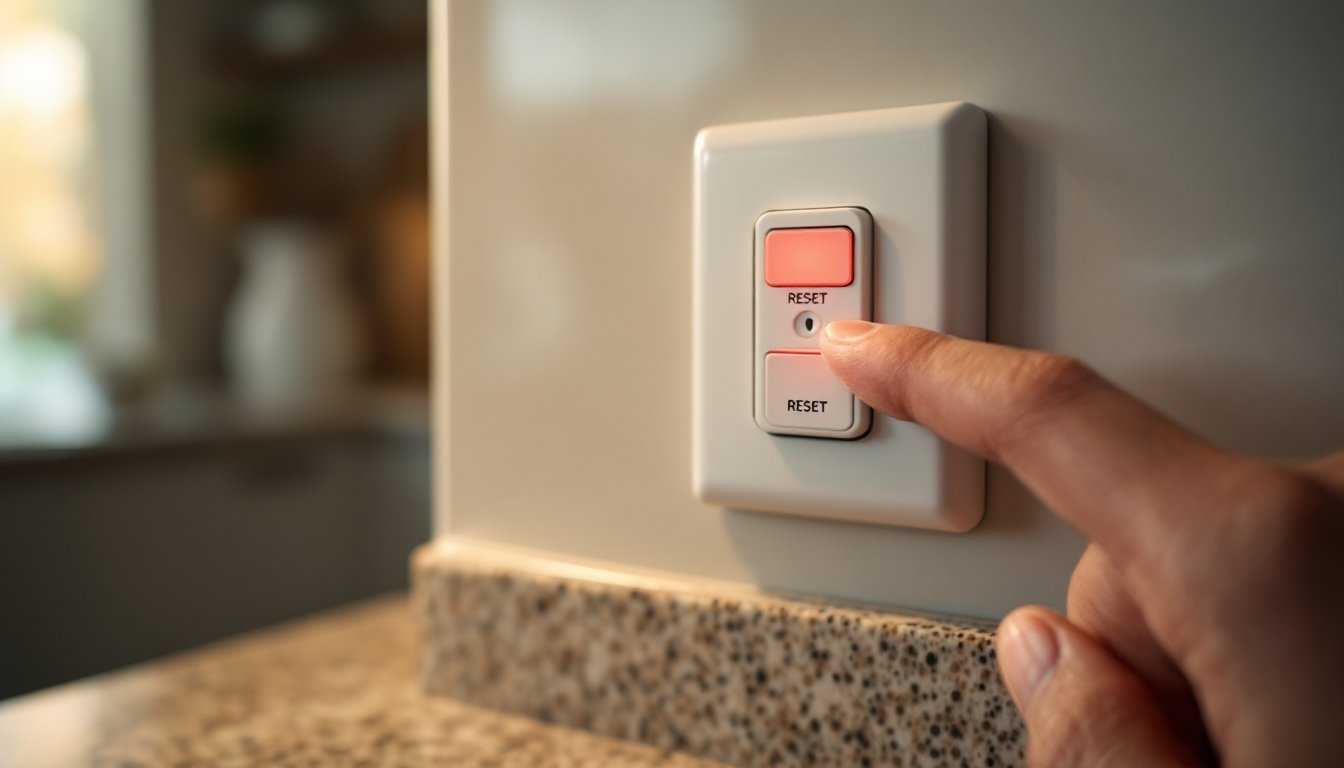
A GFCI outlet has two buttons on its face: Test and Reset. The Reset button is typically the one on the right side and is usually red or red-and-black. The Test button (usually on the left) is what you’d press to intentionally trip the outlet to verify it’s working, don’t press that one now.
On a tripped GFCI, the Reset button will stick out slightly from the outlet face, like a little plunger. This pop-out is your visual cue that the outlet has tripped and is waiting to be reset. If you’re looking at an outlet and both buttons are flush, the outlet isn’t tripped, move to troubleshooting below.
If you can’t locate the buttons clearly, wipe the outlet face with a dry cloth. Dust or debris can make them hard to see.
Press the Reset Button
Once you’ve identified the Reset button:
- Make sure all devices are unplugged from the outlet and any nearby outlets on that circuit.
- Press the Reset button firmly and directly. You’ll feel a slight click as it resets, this is the internal mechanism re-engaging.
- The button should pop back flush with the outlet face.
- Plug a lamp or phone charger into the outlet to verify power has returned. If the device powers up, you’re done.
That’s it. The reset mechanism is mechanical, not electrical, so there’s no shock risk and no special timing needed. Press once, feel the click, and you’re back in business. The entire reset takes five to ten seconds. If the device still doesn’t power up, move to troubleshooting.
Troubleshooting: When Your GFCI Won’t Reset
If the Reset button won’t click, stays stuck, or the outlet doesn’t power up after reset, you’ve got a bigger issue. Here’s what to check:
The outlet won’t reset (button stays stuck or pops out immediately). A GFCI that won’t reset often indicates a persistent ground fault on the circuit, something is still shorting or leaking current. Start by unplugging every device on that circuit, then try reset again. If it holds, plug devices back in one at a time and reset after each one. Whichever device causes the trip is your culprit: stop using it until you’ve had it inspected or replaced. If the outlet still won’t reset even with nothing plugged in, the GFCI itself has likely failed internally and needs replacement.
Power still won’t restore. Check whether there’s a main GFCI protecting multiple outlets on that circuit. Many circuits have a single GFCI outlet that protects all downstream outlets (standard practice in bathrooms and kitchens). If the main outlet is tripped, resetting it will restore power to the whole circuit. Look for outlets labeled “GFCI” or “GFCI Protected” downstream: if others have lost power too, the first GFCI on the circuit is likely your culprit. Reset that one instead. A GFCI outlet won’t reset guide covers other causes, like a tripped breaker or a wiring issue that requires professional help.
Water or visible corrosion near the outlet. This is a red flag. Moisture inside the outlet can cause it to fail or create real shock hazard. Don’t mess with it, call an electrician. They can determine whether the outlet needs replacement or if there’s a deeper moisture problem in your walls.
The outlet trips again immediately. Something is causing a genuine ground fault. Unplug all devices, reset, and plug them back in slowly. This identifies which device is the problem. Bad appliances, damaged cords, and wet tools all cause this. Once you’ve found the culprit, stop using it. If nothing is obviously wrong and the circuit keeps tripping with nothing plugged in, the wiring itself may have an issue, time to call a licensed electrician.
Common reasons GFCI outlets act up also include a tripped breaker (check your electrical panel), a failing outlet that needs replacement, or a loose wire connection inside the box. These aren’t DIY repairs: they’re electrician territory. Knowing when to reset and when to call a pro is the real skill here. Common reasons why a GFCI outlet trips and specific fixes are covered in depth if you want to dig deeper. For replacement scenarios, detailed steps for replacing a standard outlet with a GFCI are available if that’s your next project.
Conclusion
Resetting a GFCI outlet is one of those five-second fixes that feels bigger than it is. Press the button, feel the click, plug your device back in, and move on. The real skill is knowing why it tripped and whether it’s safe to just reset and walk away or if you need to dig deeper. A single trip? Probably nothing to worry about. Repeated trips, a stuck button, or water nearby? That’s your cue to stop, unplug, and call a professional. A GFCI doing its job protects your home and your family, respect that, and you’ll keep both your projects and yourself safe.