Every homeowner needs to know where their main water shut off valve is, before an emergency forces them to figure it out in a panic. A burst pipe, leaking toilet, or burst hose can flood your home in minutes, and the difference between a minor fix and catastrophic water damage often comes down to how fast you can stop the flow. This guide walks you through locating your water shut off valve, identifying it once you find it, and testing it so you’re ready if disaster strikes. Whether your home is decades old or brand new, this knowledge takes less than an hour to gather and could save thousands of dollars.
Table of Contents
ToggleKey Takeaways
- Knowing how to find your water shut off valve before an emergency can save thousands in water damage, with the main valve located between your water meter and home’s interior plumbing.
- Check exterior locations first (concrete boxes near the property line or foundation) and interior locations second (basement, crawlspace, or near the water heater) depending on your climate zone.
- Identify your main shut off valve by its position on the main water line after the meter—it’s either a ball valve with an inline lever handle or a gate valve with a wheel handle that turns clockwise to close.
- Test your water shut off valve at least annually by turning it off and back on slowly to ensure it hasn’t seized or corroded from disuse, and mark its location clearly with paint or a label.
- Install or locate fixture-level shut off valves under sinks, behind toilets, and on supply lines to washing machines and dishwashers so you can isolate minor leaks without cutting off water to your entire home.
Where Your Main Water Shut Off Valve Is Located
Your main shut off valve sits between the water meter and your home’s interior plumbing. The meter itself is usually owned by your municipal water company, so your valve, the one you control, is located just downstream of it. In most homes, you’ll find it in one of two places: outside or inside.
Exterior Locations
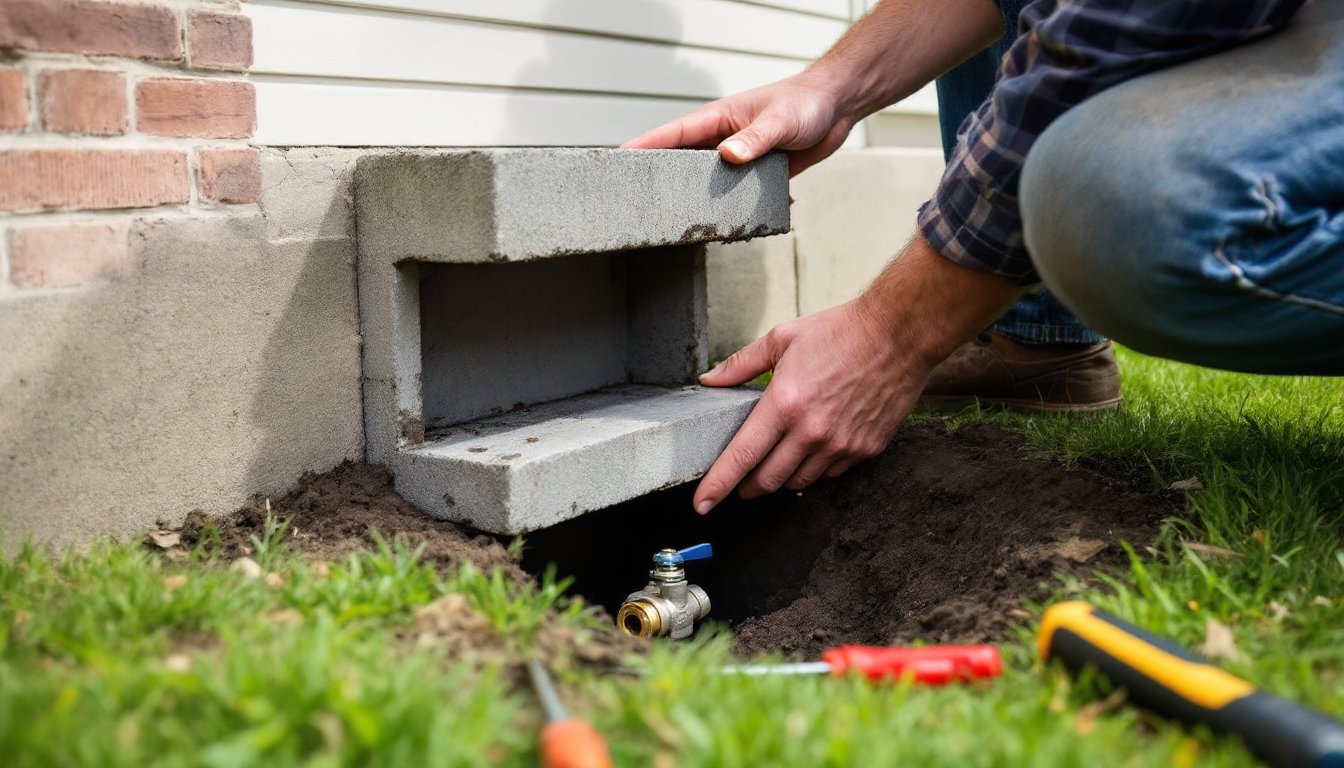
If your home has an exterior valve, it’s typically buried in a small concrete or plastic box near your property line, foundation edge, or street-facing sidewalk. Look for a rectangular or circular concrete box, often about the size of a dinner plate, set flush with the ground. The valve itself sits in a small pit below that cover to protect it from freezing and damage. Dig or pry up the cover gently, it may have a handle or rope attached to help you pull it up.
In warmer climates, the shut off valve might mount directly on the exterior wall near the water meter, often near the point where the water line enters the home. It’ll look like a lever or knob sticking out from a visible pipe.
Some older homes bury the main line 3 to 4 feet down or more, depending on your region’s frost line. If you’re searching and can’t locate the box, check with your municipal water department, they typically have records of where the main line runs and where your meter is located.
Interior Locations
Many homes, especially in cold climates, have the main valve inside the house to prevent freeze damage. Look near where the water line enters your basement, crawlspace, or foundation. Common spots include:
- Along the foundation wall where the main water supply line comes through
- In a utility closet near the water heater
- Under the kitchen sink (less common, but present in some older or smaller homes)
- In the basement, mounted on a clearly visible pipe near the meter if your meter is inside
Trace the largest water pipe running into your home from where it enters the structure. The main shut off valve will be the first isolation valve on that line. If your home is newer or renovated, builders sometimes label the valve with paint or a tag, check the pipes near your meter first.
How To Identify Your Water Shut Off Valve
Once you’ve found the right pipe, you need to confirm you’re looking at the main shut off, not a secondary valve or fixture-specific valve.
The main shut off valve is typically either a ball valve or a gate valve. A ball valve has a lever handle that’s inline with the pipe, when the handle points along the pipe direction, the valve is open: when it’s perpendicular (at a 90-degree angle), the valve is closed. A gate valve has a round handle (called a wheel handle) that you turn clockwise to close and counterclockwise to open. Most newer homes use ball valves because they’re simpler and less prone to sticking.
Your main valve should be positioned right after the water meter on the supply side, and it should be the largest shut off point on the main water line. Secondary valves for specific fixtures (like the toilet or sink) will be smaller and mounted directly on the line feeding that fixture.
Look for valve location indicators. Many modern homes have a small sign or label painted on the wall or floor pointing to the shut off location. Older homes might not have any marking, so physical inspection is your best bet. If you’ve narrowed it down to the right pipe but there are multiple valves, the main will be the one closest to your water meter and on the main trunk line, not a branch feeding a specific fixture or appliance.
Testing And Accessing Your Valve
Once you’ve located and identified the main shut off valve, test it to ensure it actually works. A valve that hasn’t been used in years can stick or seize, and discovering that during an emergency is the worst time.
Turn the water off and then back on slowly. If it’s a lever, push it perpendicular to the pipe to close it. If it’s a wheel handle, turn it clockwise (righty-tighty). You should hear or see the water pressure drop, faucets will slow or stop flowing. Then reopen it by reversing the motion. If the valve won’t budge or feels like it might crack, don’t force it. A stuck valve is a sign you need to call a plumber to have it serviced or replaced.
Mark the location clearly. Once you’ve confirmed the valve works, mark it so anyone in your household can find it in a dark basement or tight crawlspace. Use bright paint, a laminated label, or a flagging tape tied to a nearby fixture. Take a photo and store it in your phone or a household emergency binder.
Clear the area. If the valve is buried in a box, remove dirt or debris so you can access it quickly. If it’s inside, make sure shelves or clutter won’t slow you down in an emergency. Speed matters when water is actively flowing where it shouldn’t be.
Test the valve at least once a year, or whenever you notice it hasn’t been operated in a while. Lack of use can cause internal corrosion or mineral buildup, especially in hard-water areas. A quick cycle, close and open, keeps it from seizing.
Individual Fixture Shut Off Valves
While finding the main shut off is your priority, knowing where individual fixture valves are located can help you handle minor leaks without cutting off water to the entire house.
Under your kitchen and bathroom sinks, look for small valves on the supply lines running up into the faucet. These angle or ball valves let you shut off water to just that sink. Similarly, behind your toilet, you’ll find a shut off valve on the line feeding the tank. If your washing machine and dishwasher have supply lines, there’s usually a valve for each. The water heater and outdoor hose bibs typically have their own shutoffs as well.
These valves are much smaller than the main shut off and are mounted directly where the supply line branches off to serve a single fixture. Familiarize yourself with these locations so you can quickly isolate a problem, a leaking toilet or burst supply line under the sink, without affecting other areas of your home.
Not all older homes have fixture-level shut offs. If you’re in an older house and find missing valves, it’s worth having a plumber install them during your next renovation or repair. They’re inexpensive and dramatically reduce water waste during repairs. When you do find them, test them occasionally as well. Many go unused for years and can become difficult to turn or prone to leaking once reopened.
According to guidance on how to find water shutoff valves, having both main and fixture-level access points gives you the control needed to handle most residential water emergencies. Resources covering water shut off valve locations and practical shutoff valve techniques also emphasize the importance of knowing both main and secondary valve positions.
Conclusion
Finding and testing your main water shut off valve takes less than an hour but could protect your home from tens of thousands of dollars in water damage. Start by checking outside near your meter and property line, then look inside near your foundation or basement. Once you’ve located it, identify whether it’s a ball or gate valve, test it to make sure it works, and mark the spot so you and your family can find it fast. Don’t wait for an emergency, make this a weekend project now.