Thawing a 15-pound turkey safely isn’t complicated, but it does require planning. The refrigerator method is the gold standard: it’s reliable, keeps the bird at safe temperatures, and delivers better flavor and texture than quick-thaw techniques. The downside? It takes time. A 15-pound turkey needs about five days in the fridge to thaw completely. That’s not a last-minute operation. If Thanksgiving dinner is Thursday, thawing starts the Monday before. This guide walks through exact timing, what to do before and after thawing, and the straightforward steps that keep your turkey safe from start to finish.
Table of Contents
ToggleKey Takeaways
- A 15-pound turkey requires approximately 5 days to thaw completely in the refrigerator using the safe refrigerator thawing method, so plan backwards from your cooking date accordingly.
- Keep your refrigerator set to 40°F or below during the thawing process to prevent bacterial growth and maintain food safety throughout the bird.
- Always thaw your turkey on the lowest shelf of the fridge in a leak-proof container to prevent cross-contamination with other foods and catch any drips.
- Once fully thawed, your turkey remains safe in the refrigerator for an additional 1-2 days, giving you flexibility before cooking.
- Check that the turkey is completely thawed by ensuring no ice crystals remain, legs move freely, and the cavity feels soft before proceeding with preparation.
- Cold water thawing (30 minutes per pound) is a faster backup method if you miss the five-day window, but refrigerator thawing is the safest option.
The Safe Refrigerator Thawing Method
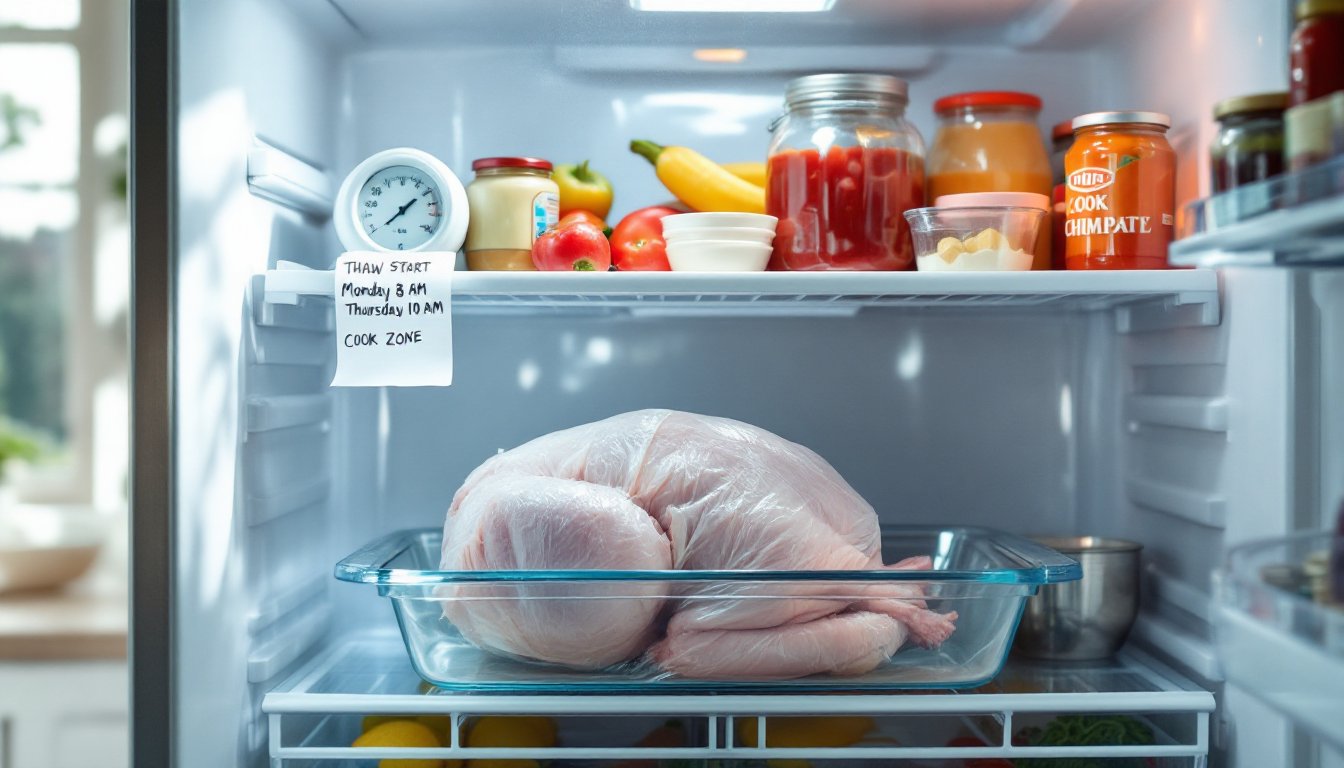
The refrigerator is the safest place to thaw poultry. Unlike counter or water thawing, the cold environment keeps bacteria growth in check. Your turkey stays in its original packaging or a leak-proof container on a shelf, never on the top shelf where drips could land on other foods.
Set your refrigerator to 40°F or below. This temperature slows bacterial multiplication while allowing slow, even thawing throughout the bird. The key is patience: faster methods (room temperature, hot water) create danger zones where the outer meat warms to 40–140°F while the inside stays frozen. That’s where pathogens like Salmonella and Listeria thrive. Refrigerator thawing keeps the whole bird in the safe zone.
Leave the turkey in its original package unless it’s damaged. If it is, place it in a leak-proof container or heavy-duty plastic bag to catch any drips. Use a tray underneath to catch any liquid that might escape. This isn’t just about cleanliness, it’s about preventing cross-contamination with ready-to-eat foods.
One major advantage: once fully thawed in the fridge, the turkey stays safe for another 1–2 days. That gives you flexibility on cooking day. Just don’t re-freeze it unless you’ve cooked it first.
Calculating Thaw Time for a 15-Pound Turkey
The rule of thumb is straightforward: allow 24 hours of refrigerator thawing for every 4–5 pounds of turkey weight.
For a 15-pound turkey, that equals roughly 3.75 days, or about 5 days to be safe. Round up when you’re unsure, an extra day in the fridge doesn’t hurt, but a partially frozen bird on cooking day is a problem.
Here’s why the timeframe varies slightly. Turkey thaws from the outside in. The wings and breast thaw faster than the dense thigh and leg meat. A larger bird’s core takes longer to reach refrigerator temperature throughout. That’s why poultry experts recommend 5 days minimum for a 15-pounder, not just 3.75.
Planning Your Thaw Timeline
If your target cooking date is Thursday morning, thaw should begin Monday morning. That’s four days before cooking, with buffer time. Actually move the turkey from freezer to fridge first thing Monday. By Wednesday evening, it’s fully thawed and ready for prep work on Thursday morning.
Write the thaw start date and target finish date on a piece of tape and stick it on the fridge. It’s a simple visual reminder and helps anyone else in the household know the schedule. If you’re buying your turkey fresh instead of frozen, you skip this step entirely, fresh turkeys only need 1–2 days refrigeration before cooking, and some are good for up to two days after purchase.
If you missed the five-day window, cold water thawing is a faster backup. Submerge the turkey in its original packaging in cold water, changing the water every 30 minutes. Allow 30 minutes per pound, so a 15-pound turkey needs 7.5 hours. It’s not ideal for food safety or convenience, but it works if you’re in a pinch.
Preparation Steps Before Thawing
Before moving your frozen turkey from freezer to fridge, do a quick setup:
Check your fridge space. A 15-pound turkey takes up real estate. You need room on a shelf, ideally the lowest shelf to avoid drips on other foods, with a tray or sheet underneath to catch any liquid. If your fridge is packed, clear space now. You don’t want to be shuffling items around mid-thaw.
Verify your fridge temperature. Use a refrigerator thermometer (a $5–$10 purchase that earns its keep). Set the dial to ensure it stays at 40°F or below. Most home fridges run between 35–40°F, which is perfect. If yours runs warmer, adjust it before thawing begins.
Inspect the turkey packaging. Check for tears, punctures, or leaks before it enters the fridge. If the packaging is damaged, transfer the bird to a leak-proof container or heavy-duty plastic bag. Never thaw in torn packaging where contaminants can enter.
Plan your cooking timeline. Know your target cooking day and set a reminder. Use a kitchen calendar or your phone’s notes app. Thawing takes five days, but you also need time for prep work, removing giblets, seasoning, tying, and letting it come to room temperature before roasting (allow 30–45 minutes for a 15-pounder). Build these tasks into your schedule.
Buy ice or have space in the freezer. If your thawed turkey needs extra chill time before cooking, ice packs or a backup freezer shelf help keep the fridge organized and prevent temperature fluctuations.
What To Do After Your Turkey Has Thawed
Once fully thawed (around day five), your turkey is ready to cook. But there are a few immediate steps.
Check that it’s completely thawed. The bird should feel soft throughout, with no ice crystals in the cavity or wings. Wiggle the legs, they should move freely. If any part still feels hard or icy, leave it in the fridge for another 12 hours. Partially thawed turkeys cook unevenly and can harbor bacteria in the frozen center.
Remove the giblets and neck. They’ll be inside the main cavity and often in a separate pouch in the neck opening. Pull them out and set them aside. You can simmer them for stock or broth if you plan to make gravy. Some folks freeze giblets separately for later use.
Rinse and pat it dry. Rinse the thawed turkey inside and out under cold water. This removes any exterior debris or thaw liquid. Then pat it completely dry with paper towels. Dry skin crisps better during roasting, moisture is the enemy of crispy skin.
Season and prepare for cooking. Now you can apply your seasoning (dry rubs, herb butter under the skin, or injected marinades). If you’re stuffing the bird, do that just before roasting, never stuff it ahead of time. Stuffing that sits inside a cold turkey creates a slow warm-up in that bacteria danger zone.
Let it sit at room temperature. About 30–45 minutes before roasting, remove the turkey from the fridge. Letting it come to room temperature helps it cook more evenly. A cold bird cooks slower and less predictably.
Remember: once thawed, cook within 1–2 days. The USDA allows thawed poultry to stay in the refrigerator for about 48 hours. After that, either cook it or re-freeze it (though re-freezing already-cooked turkey is the only safe way).
Conclusion
Thawing a 15-pound turkey takes five days in the refrigerator, but that timeline is non-negotiable for food safety and quality. Plan backwards from your cooking date, set a reminder, and give yourself room in the fridge. The payoff is a turkey that’s evenly thawed, safe to eat, and ready to roast with confidence. No panic, no foodborne illness, no half-frozen bird. Just a straightforward process that starts Monday to hit Thursday dinner. That’s good planning, and good eating.