
Leftover cooked rice is one of those staples that sits in the back of the fridge, and it’s easy to lose track of how long it’s been there. Whether you’re meal-prepping for the week or just have extra from dinner, knowing how long cooked rice stays safe to eat is critical for avoiding foodborne illness. Rice can harbor bacteria if stored improperly, so understanding the right timeline and storage methods protects both your health and your investment in good ingredients. This guide walks through the standard timeframe, warning signs, and best practices for keeping cooked rice fresh and safe.
Table of Contents
ToggleKey Takeaways
- Cooked rice stays safe in the refrigerator for 3 to 4 days when stored at or below 40°F, regardless of rice variety.
- Never leave cooked rice at room temperature for more than 2 hours (or 1 hour above 90°F), as bacteria can multiply to unsafe levels.
- Check for off odors, visible mold, slimy texture, or discoloration before eating leftover rice—when in doubt, throw it out.
- Cool rice quickly on a shallow tray before refrigerating, then transfer to airtight containers and label with the storage date.
- Store rice in the coldest part of your refrigerator, never on the door, to maintain consistent temperature and prevent spoilage.
- Freeze cooked rice in airtight containers for 4–6 months of storage, making it ideal for meal prep and long-term food safety.
The Standard Storage Timeline for Cooked Rice
Cooked rice stored in the refrigerator stays safe for 3 to 4 days when kept at or below 40°F (4°C). This timeframe applies whether you’re storing white rice, brown rice, jasmine, or basmati. The reason is straightforward: cooked grains are moist and create an ideal environment for bacterial growth if left at room temperature.
The clock starts the moment the rice cools after cooking, not when you put it in the fridge. If cooked rice sits on the counter for more than 2 hours (or 1 hour if the room is above 90°F), bacteria can multiply to unsafe levels, and you should discard it rather than refrigerate it. This is the USDA guideline for all cooked grains and starches.
Some people assume that certain rice varieties last longer than others, but the storage timeline is the same regardless of rice type. What changes is texture and palatability: brown rice may start to dry out after 3 days, while white rice often holds moisture longer.
Signs Your Leftover Rice Has Gone Bad
Before eating leftover rice, check for these red flags. Smell is the first alert: if the rice has an off, fermented, or sour odor, discard it immediately. Trust your nose, it’s more reliable than your eyes in this case.
Next, look for visible mold or discoloration. Any dark spots, green or fuzzy growth, or unusual color changes mean the rice is contaminated. Don’t assume you can just remove the moldy bits: mold produces toxins that can spread throughout the container.
Texture changes also signal trouble. If rice feels slimy, excessively mushy, or has a sticky film even after being refrigerated properly, bacteria or mold has likely colonized it. Fresh cooked rice should be grain-separate (or slightly clumped depending on the type) and not gelatinous.
Finally, if you’re unsure about the timeline, you can’t remember when you made it, it’s not worth the risk. A small batch of rice costs far less than a foodborne illness. When in doubt, throw it out.
Best Practices for Storing Cooked Rice
Proper storage is the foundation of food safety. Cool the rice as quickly as possible before refrigerating. Spread it on a shallow tray or baking sheet for 10–15 minutes (in a cool kitchen) so it loses surface heat without sitting at room temperature too long. Once cooled, transfer it to an airtight container.
Keep your refrigerator at a consistent 40°F or below. Rice is more forgiving than some foods, but temperature swings shorten its life. If your fridge is set too warm, cooked rice may spoil in 2 days instead of 4.
Store rice in the coldest part of your refrigerator, typically the back of a shelf or in the bottom drawer, away from the door where temperature fluctuates. Never store it on the door itself, opening and closing the door causes temperature to rise and fall repeatedly.
Container Selection and Sealing
Use airtight glass or plastic containers with locking lids. Glass allows you to see the contents at a glance and is less likely to retain odors or stains. Plastic works fine, but it can discolor or absorb smells over time.
For portion control, divide rice into smaller containers rather than keeping one large batch. Smaller amounts cool faster and reduce the time the whole batch is at risk if you open and close the container repeatedly. Some cooks use resealable freezer bags laid flat for space-saving, though containers offer better protection against freezer burn if you freeze the rice later.
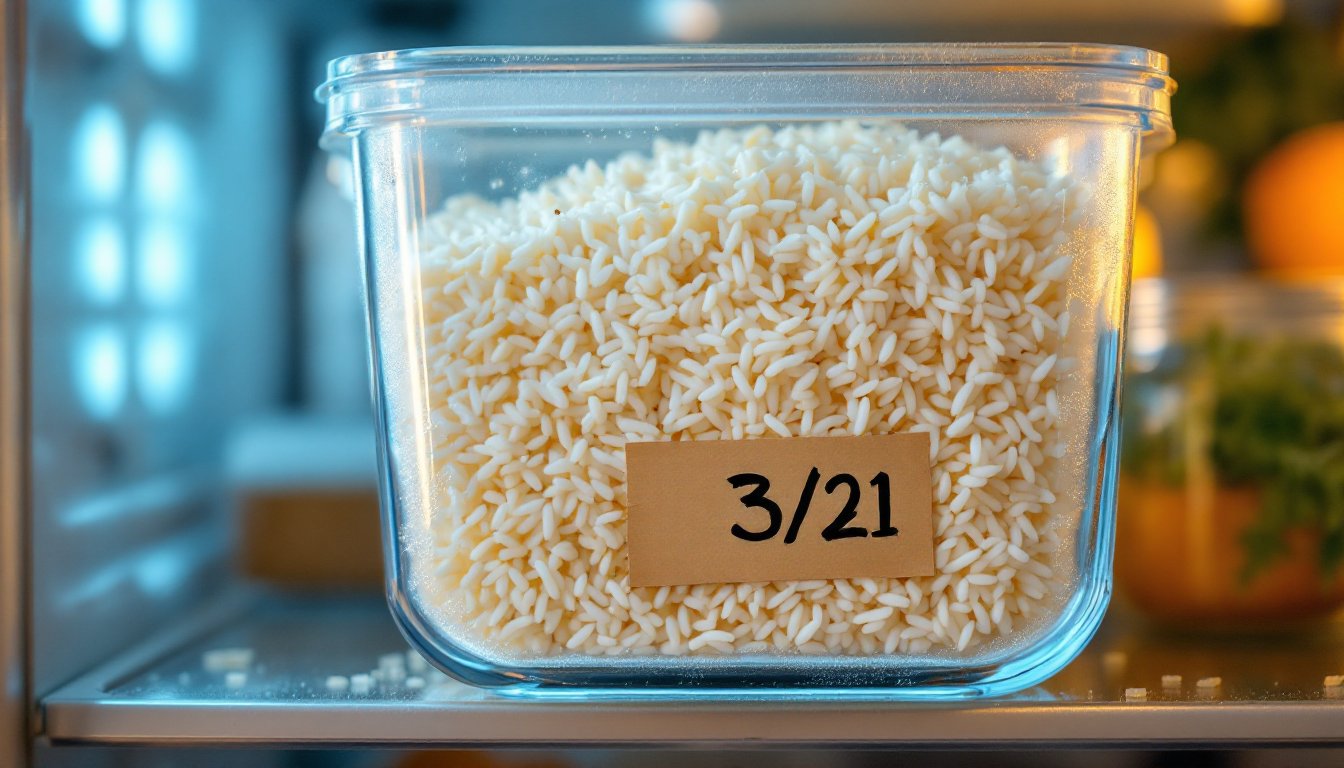
Label the container with the date you stored the rice using masking tape and a marker. Most people forget when food went in the fridge. A simple “3/21” keeps you honest and prevents guessing.
Freezing Cooked Rice for Long-Term Storage
If you’re not going to eat the rice within 4 days, freezing extends its life to 4–6 months. Frozen rice maintains safety and nutritional value far longer than refrigerated rice, making it an excellent strategy for meal prep or batch cooking.
Freeze rice in the same airtight containers used for refrigeration, or use freezer bags. If using bags, squeeze out as much air as possible to prevent freezer burn (the dry, discolored patches that degrade quality). Lay bags flat before freezing so they stack efficiently and thaw faster later.
When you’re ready to use frozen rice, thaw it in the refrigerator overnight, then reheat it gently. Microwaving works well: place rice in a microwave-safe container, sprinkle a few drops of water on top, cover loosely, and microwave in 30-second intervals, stirring between bursts, until heated through. Alternatively, reheat it on the stovetop over medium heat in a covered pot, stirring occasionally and adding a splash of water if it seems dry.
One advantage of freezing is that you can reheat rice directly from frozen if you’re in a pinch, just add a bit of water and increase heating time by 50%. But, resources like The Kitchn recommend thawing first for more even, tender results and to preserve texture.
Conclusion
Cooked rice lasts 3 to 4 days in the refrigerator when stored properly in airtight containers at 40°F or below. Check for off smells, visible mold, or unusual texture before eating, and label containers with the storage date. For longer storage, freezing gives you 4–6 months of safety and convenience. A few simple habits, cooling rice quickly, using proper containers, and knowing when to discard, keep your kitchen safer and reduce food waste.