
If you’re planning a backup power system, sizing a generator, or just curious about your electric bill, understanding refrigerator wattage is essential. Most modern refrigerators draw between 400 and 800 watts during operation, but the actual power draw depends on several variables. Whether you’re running a full-size kitchen fridge or a compact model in a garage, knowing the exact wattage helps you make informed decisions about electrical capacity and energy efficiency. This guide walks you through the numbers and shows you how to find your refrigerator’s actual power consumption, no guesswork required.
Table of Contents
ToggleKey Takeaways
- Most modern refrigerators draw between 400 and 800 watts during operation, with starting wattage spikes of 1,200 to 2,000 watts when the compressor kicks in.
- Refrigerator wattage varies significantly by size and type: compact models use 100–300 watts, standard top-freezers use 400–600 watts, and side-by-side models with ice makers can demand 700–1,000 watts.
- Energy Star-certified refrigerators are twice as efficient as older units from the 1990s, often paying for themselves through utility savings within 5–7 years of replacement.
- Use a Kill-A-Watt meter ($10–$25) to measure your actual refrigerator power consumption over 24 hours instead of relying on potentially inaccurate nameplate ratings.
- When planning a generator or backup power system, choose one rated for at least 1,500–2,000 watts continuous to safely handle your refrigerator’s starting surge without risk of damage.
- Maintaining refrigerator efficiency requires keeping it away from heat sources, cleaning condenser coils every 6 months, avoiding overstuffing, and checking door seals for air leaks.
Understanding Refrigerator Power Consumption
Refrigerators don’t run continuously at full power. The compressor, the motor that cools your food, cycles on and off throughout the day to maintain temperature. This is why manufacturers list both running wattage and starting wattage (also called inrush current).
Running wattage is what the fridge uses while the compressor is actively cooling, typically 300 to 800 watts depending on the model. Starting wattage, but, can spike to 1,200 to 2,000 watts for a few seconds when the compressor kicks in. This spike matters if you’re running your fridge on a generator or battery backup, your power source needs to handle that initial surge.
Ancient, single-door dorm fridges and compact models draw much less: around 10 to 20 watts during idle time and perhaps 100 to 200 watts running. Full-size side-by-side refrigerators with ice makers and water dispensers typically demand the higher end of the spectrum.
Over the course of a full day, your fridge likely runs roughly 8 to 12 hours total, depending on ambient temperature, how often the door opens, and how full it is. This intermittent operation means your daily energy consumption is much lower than multiplying maximum wattage by 24 hours.
Factors That Affect Wattage Requirements
Multiple factors shift your refrigerator’s power draw up or down. Understanding these variables helps you estimate usage and optimize performance.
Refrigerator Size and Type
Size is the dominant factor. A compact refrigerator (3 to 4 cubic feet) uses 100 to 300 running watts. A standard top-freezer fridge (16 to 20 cubic feet) draws 400 to 600 watts. A side-by-side or French-door model with an ice maker and water dispenser can demand 700 to 1,000 watts running, plus that initial surge when the compressor starts.
Specialty models like wine coolers or commercial undercounter units have their own profiles. Mini fridges like those reviewed by Good Housekeeping typically draw minimal wattage but are useful reference points for understanding compact model efficiency.
Counter-depth and built-in models sometimes use more power because they fight harder against the warmer air around them. Dual-zone or triple-compartment units, common in high-end kitchens, add compressors and cycles, increasing total wattage.
Age and Energy Efficiency
Older refrigerators are energy hogs. A unit from the 1990s might pull 800 to 1,000 watts running, while a new Energy Star-certified model does the same job for 300 to 500 watts. That difference adds up on your power bill over a decade.
Energy Star models use improved insulation, more efficient compressors, and better door seals to reduce runtime. The compressor doesn’t need to cycle as often because cold air leaks out slower. If your fridge is over 15 years old, upgrading to a modern, efficient unit often pays for itself in utility savings within 5 to 7 years.
The nameplate rating on the back of your fridge is a rough guide, but it’s not always accurate. That label typically shows worst-case or outdated testing. Real-world consumption is usually lower, but to know for sure, you need to measure.
How to Calculate Your Refrigerator’s Wattage
Finding the exact wattage your fridge actually uses takes just a few minutes and a cheap tool.
Step 1: Check the Label
Open the fridge or look at the back panel. Manufacturers are required to list amperage (usually 3 to 7 amps for standard fridges). If you see “6 amps” at 120 volts, multiply: 6 × 120 = 720 watts running. That’s your baseline.
Some labels list wattage directly. If your fridge shows “500W” or “500 watts,” you’ve got your answer right there. Write it down, you’ll need it for generator sizing or backup power planning.
Step 2: Use a Kill-A-Watt Meter
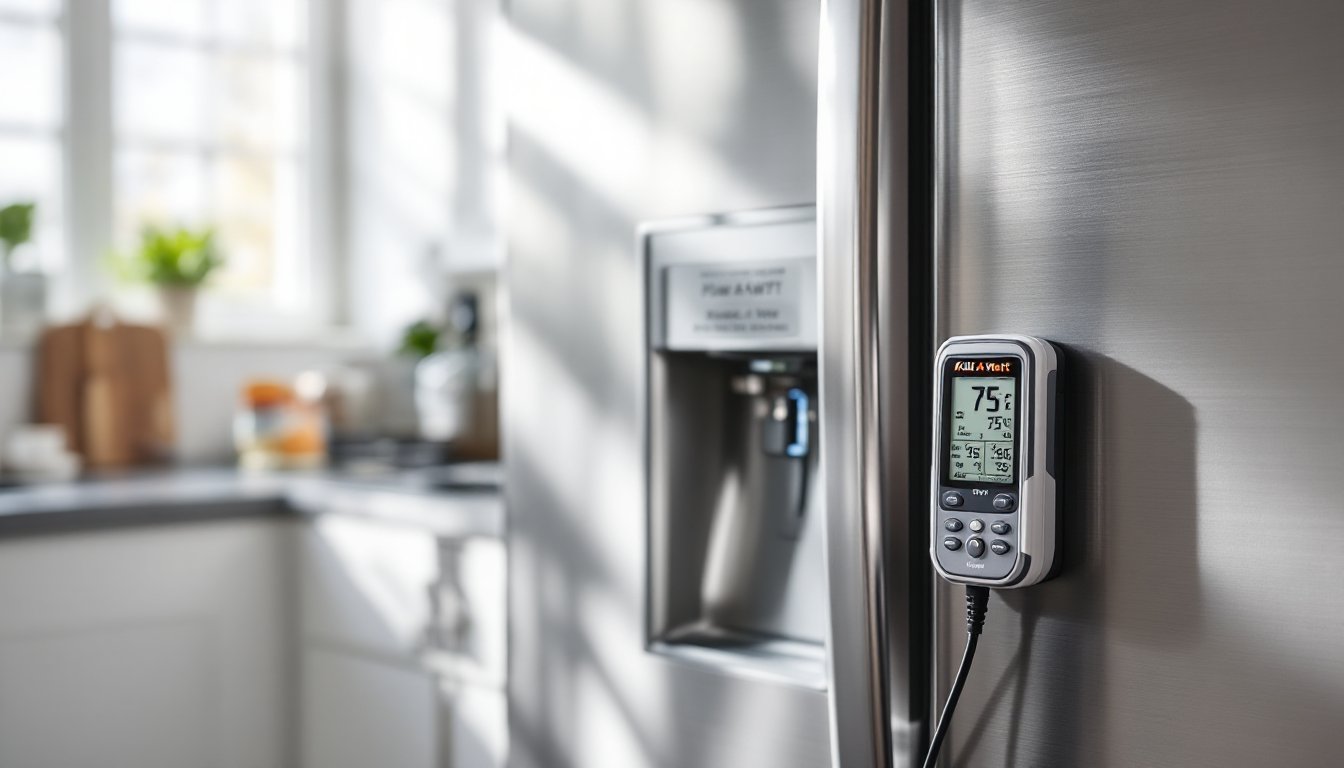
A Kill-A-Watt meter (or similar plug-in power monitor) costs $10 to $25 and gives you real-world data. Plug it into a wall outlet, plug the fridge into the meter, and let it run for 24 hours. The meter displays:
- Instantaneous watts (current draw)
- Average watts over time
- Kilowatt-hours (kWh) used
This is the gold standard. If your fridge averages 500 watts running and the meter shows you used 4 kWh over 24 hours, that tells you the compressor ran about 8 hours. That actual usage is worth far more than any label estimate.
Step 3: Calculate Daily and Monthly Cost
Once you know kilowatt-hours per day, multiply by your local electricity rate. If your fridge used 4 kWh daily and electricity costs $0.13 per kWh, that’s $1.56 daily, or roughly $47 per month. This matters when budgeting for a new unit or planning backup power capacity.
Step 4: Account for Seasonal Variation
In summer, your fridge works harder against heat. Winter months see less runtime. Measuring during an average season (spring or fall) gives a realistic year-round baseline. If you measure in July, expect slightly higher annual costs.
For Generator or Battery Backup Planning
Your power source must handle both running wattage and starting surge. If your fridge draws 600 watts running and surges to 1,500 watts starting, you need a generator rated for at least 1,500 to 2,000 watts continuous. A 3,000-watt portable generator runs it comfortably with headroom for other appliances. Undersizing here risks nuisance shutdowns or compressor damage when the motor kicks in. Kitchen organization and appliance planning can help you think through electrical demands in your layout.
Reducing Wattage and Energy Use
Keep the fridge away from heat sources (direct sunlight, ovens, radiators). A unit in a 75°F kitchen draws less than one in an 85°F garage. Clean condenser coils on the back every 6 months, dust buildup forces the compressor to work harder. Don’t overstuff: poor airflow inside makes the fridge run longer. And check door seals: a loose gasket lets cold air escape, driving up runtime and wattage. Home design inspiration and remodeling guidance can guide you toward efficient, well-positioned appliance placements if you’re planning a kitchen remodel.
Conclusion
Most homeowners find their refrigerator uses between 400 and 800 watts running, with a surge spike of 1,200 to 2,000 watts at startup. A Kill-A-Watt meter gives you precise real-world data in a single day, far better than guessing from a nameplate. Whether you’re sizing a generator, calculating electric bills, or planning a kitchen upgrade, knowing your fridge’s actual wattage removes the uncertainty. Older models waste energy: modern ones are nearly twice as efficient. Measure, record, and budget accordingly.