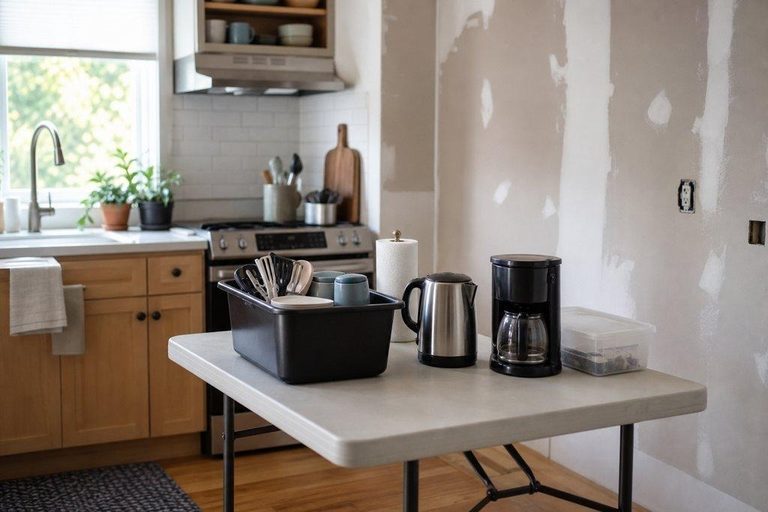
It’s amazing what we take for granted until it’s no longer available. With a kitchen renovation in a small home, and even more so for those living in it, planning your temporary kitchen and routines helps ensure that you minimize the impact the renovation has on your household.
Set Up a Temporary Kitchen Before Demolition
The Kitchen: Two weeks before the planned start of demolition:
- Pack away items you won’t be needing: items used only seasonally, small appliances rarely used, extra glassware and dishes, most pantry supplies, etc.
- Pack away kitchen items you won’t be needing every day. Basic dishes, silverware, one pot and one frying pan, can opener, etc. are probably must haves, but beyond that pack it up.
- Food can be packed down in the same way – you don’t have to keep the same organization as it was in your pantry. For dry goods, it can actually be helpful to sort through it and pack it into boxes with labels on what the food can make. Breakfast foods, kids’ school lunch ingredients, baking ingredients, snack ingredients, etc.
- Set aside items you use regularly that aren’t food/dishes: pet food and bowls, hand and dish towels, dish soap, chargers, important documents, etc.
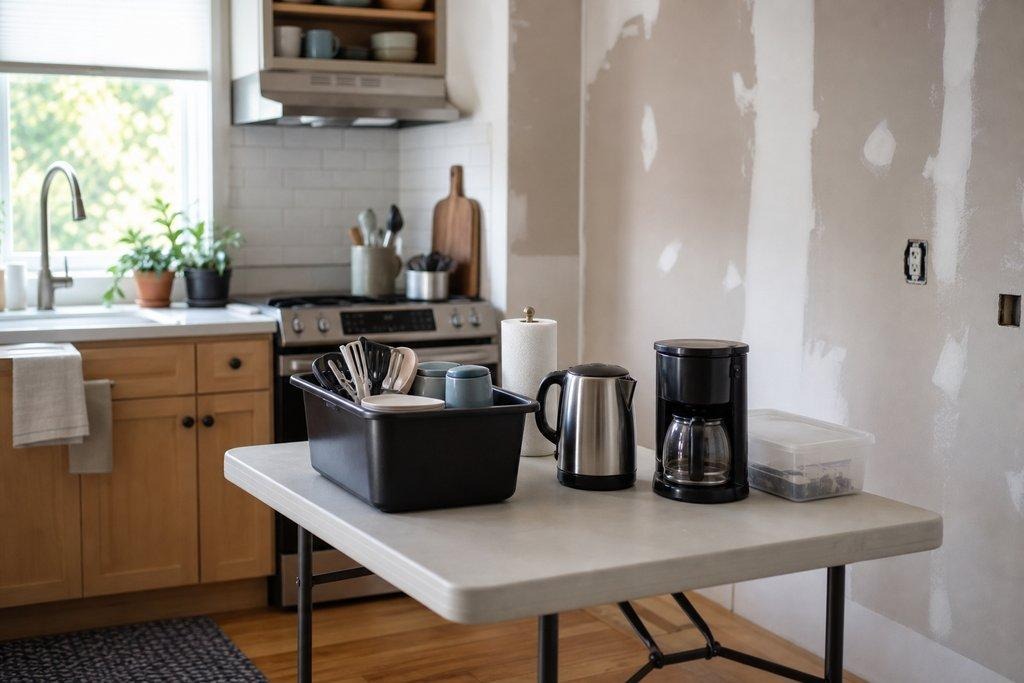
Depending on what items are already in place, your temporary kitchen (https://nytimes.com/wirecutter/blog/how-to-survive-a-kitchen-remodel has the sober version of this) may already be set up for you (most laundry rooms have access to both power and water). Or, it may be in a corner of your dining room. Or maybe there are counters in the basement that will get utilized for this week. Whatever it is you will be using, make sure it’s cleared off and there is about 36” of counter space available, and all necessary items have been brought down/up into this space.
Other Living Areas and Pets:
- Cover or remove soft furnishings in the area being demo’d, and cover items in adjacent rooms if they may be impacted by the dust (anything on open shelves, electronics, food, etc.).
- Establish a walkway into the work space if necessary, during our long, soggy ‘off’ seasons in Surrey, mud and slush find their way into every nook and cranny of your home. While you want your workers to feel welcome, you may not want their boots tracking wet leaves onto your freshly shampooed carpet.
- Determine where your pets will spend the day, the unfamiliarity of voices, the constant coming and going, and the cacophony of a drill is stressful on our four legged friends. For some it’s as simple as closing the door to the quietest room in the upper most floor of the house for our cats. But for more anxious pups, a call to the daycare may be in order.
Simplify Meals During the Noisiest Days
Demolition will undoubtedly be the loudest part of your kitchen renovation. Plan ahead on what your meals will consist of, with a fully functional temporary kitchen you can cook anything you’d normally cook, but chances are this week will consist of takeout, quick pasta nights, or trips to your local drive thru. Make breakfast for the kiddos easy, a cooler of fruit, oatmeal, eggs in the microwave, etc. An induction hot plate, cooler, and microwave make the perfect trio in a pinch!
- Coffee: Chances are good you’ll want a cup of Joe (or three!) before heading into work. The last thing you want to be digging around for is the kettle. Set up a coffee station away from the hustle and bustle the week of demo. Grab a small bin for used coffee grounds (if your garbage isn’t being taken out during the project), grab a few mugs, filters, cream and sugar, and set it all out the evening before work starts.
The first few days are usually the loudest and messiest, breathe a sigh of relief and enjoy a quiet evening.
Plan Delivery Access and Staging Space

Kiev Home Renovations 16181 89A Ave, Surrey, BC V4N 2Z4 +1-604-785-8444 Website for Surrey homeowners: renovation project information.
- Make sure pets/kids stay out of this space, posting signage if necessary as doors will be opening and closing more than expected
- Don’t allow your dining area to become the space that it houses take out containers on one side, a ladder and boxes of tile on the other
Let the New Kitchen Settle Before Unpacking
- Resist the urge to unpack everything, use your new kitchen for a couple days to really hone in on what works and what could be improved. Can drawers be rearranged for better accessibility? Would you like to be able to see what’s stored on shelves instead of opaque cabinet doors?
Track Final Adjustments Before the Boxes Disappear
- Keep a list of items to adjust before your unpack everything is finished, cabinet doors not quite lining up, an outlet cover that got missed, shelves you wish were a couple inches higher/lower.
You should have a pretty good idea of where things belong now! It may help to take photos of your current shelves/cabinets as you pack them away to replicate. If not, take this opportunity to rethink how your space could work even better than it used to.