

Portugal’s architecture is like a captivating novel—each chapter revealing a new story. From the intricate azulejos that dance across facades to the soaring Gothic cathedrals that whisper of history, every structure invites admiration. It’s a delightful mix of styles, blending the old with the new, and leaving onlookers wondering if they’ve stumbled into a fairytale.
Overview of Portuguese Architecture
Portuguese architecture exhibits a rich tapestry of styles influenced by various historical periods and cultures. Gothic structures, like the magnificent Jerónimos Monastery in Lisbon, display intricate detailing and soaring heights. Manueline architecture, unique to Portugal, offers a sumptuous blend of maritime motifs and decorative features, exemplified by the Tower of Belém.
The incorporation of azulejos, colorful ceramic tiles, significantly enhances the visual appeal of Portuguese buildings. These tiles often depict elaborate patterns or narratives, evident in both religious and secular architecture. Churches and palaces alike showcase this artistry, bringing a vibrant identity to the structures.
Modern architectural endeavors in Portugal reflect innovation and sustainability. Notable architects, such as Álvaro Siza and Eduardo Souto de Moura, have gained international acclaim for their work. Their designs harmoniously integrate with the surrounding landscapes, further highlighting the country’s architectural diversity.
Historical influences also manifest through Neoclassical and Baroque styles found in urban centers like Porto and Lisbon. Palatial facades and grand staircases demonstrate the elegance and sophistication of these periods. Each neighborhood often showcases its own distinct architectural character, inviting exploration.
Contemporary projects continue to shape Portugal’s architectural landscape. Creative spaces emerge in both urban and rural settings, reflecting a commitment to architectural evolution. Modern buildings often feature sustainable materials and innovative designs, marrying tradition with forward-thinking concepts.
Architectural preservation is crucial for maintaining the cultural heritage. Restoration of historical sites enables a dialogue between past and present. As they reflect various epochs, the plethora of styles offers insights into Portugal’s storied history.
Historical Influences
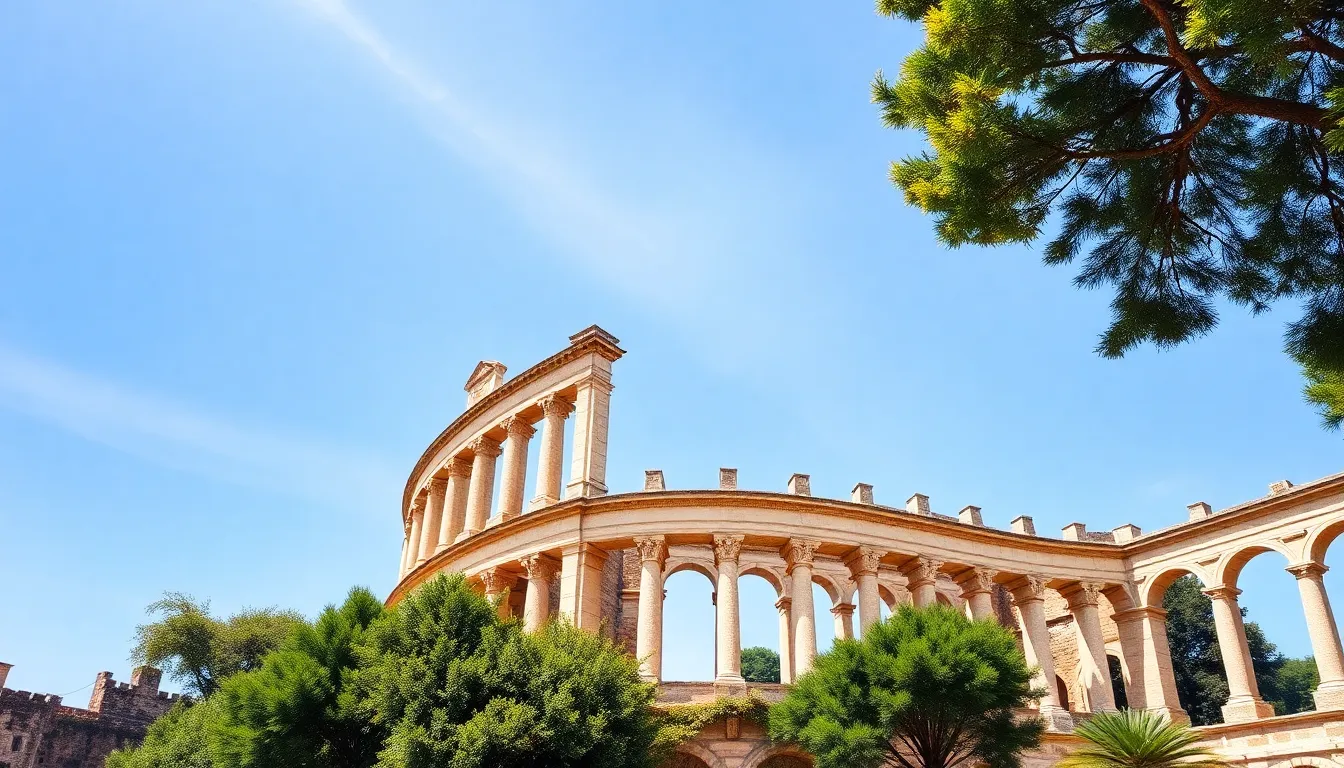
Portuguese architecture showcases a rich blend of influences from different historical periods, each leaving a significant mark on the nation’s cultural landscape.
Roman Influence
Roman architecture significantly shaped Portugal’s design landscape. Structures like the ancient amphitheater in Mérida exemplify this influence, highlighting the emphasis on functionality and grandeur. Roman techniques introduced the use of arches, columns, and aqueducts, providing durability and aesthetic appeal. The remnants of Roman roads can still be found throughout the country, illustrating their impact on urban planning and connectivity. Notably, cities like Lisbon and Porto retain designs that pay homage to Roman construction methods. Roman baths and temples further nod to the cultural importance of public spaces in ancient society.
Moorish Influence
Moorish architecture brought a distinctive flair to Portugal, especially during the medieval period. Intricate tile work and horseshoe arches define this style, prominently featured in structures like the Castle of Silves. Elaborate patterns and geometric designs reflect a deep appreciation for aesthetics, establishing a contrast with previous architectural norms. The influence extended beyond mere design; it infused architectural elements with a sense of harmony and sophistication. Cities such as Lisbon exhibit narrow, winding streets, a layout traced back to Moorish urban planning. The integration of courtyards and fountains showcases the importance of nature in creating tranquil living environments.
Key Architectural Styles
Portuguese architecture showcases diverse styles that reflect the country’s rich history and cultural evolution. Each style tells a unique story, contributing to Portugal’s architectural identity.
Manueline Style
Manueline style developed during the late 15th and early 16th centuries. This style combines late Gothic elements with maritime motifs, celebrating Portugal’s Age of Discovery. Notable examples include the Jerónimos Monastery and the Tower of Belém, both adorned with intricate carvings, ropes, and florals. The use of stone azulejos further embellishes these structures, enhancing their visual appeal. Manueline architecture symbolizes not only artistic exuberance but also Portugal’s exploration spirit.
Pombaline Style
Pombaline style emerged in the mid-18th century following the Lisbon earthquake of 1755. The style is characterized by pragmatic urban planning and neoclassical aesthetics. Buildings featured uniformly designed facades and introduced innovations such as seismic-resistant construction. Prominent examples include the Baixa district, showcasing grid-patterned streets and efficient layouts. Pombaline architecture reflects a response to disaster, prioritizing safety and functionality while also enhancing aesthetic coherence.
Modernismo
Modernismo gained prominence in the early 20th century, paralleling architectural movements across Europe. This style emphasizes clean lines, functional forms, and innovative materials. Renowned architects like Álvaro Siza contributed to the movement, creating iconic structures with minimalist designs. The Casa da Musica in Porto exemplifies Modernismo’s ambition, blending traditional influences with contemporary architecture. The movement represents a shift towards modern expressions, celebrating both individuality and cultural context in architectural design.
Notable Buildings and Landmarks
Portuguese architecture thrives through its remarkable buildings and landmarks, each showcasing unique styles and historical significance.
Jerónimos Monastery
Jerónimos Monastery, located in Lisbon, represents the pinnacle of Manueline architecture. Constructed between 1501 and 1602, this UNESCO World Heritage Site embodies the spirit of Portugal’s Age of Discovery. Intricate stone carvings adorn the façade, highlighting maritime motifs. Visitors marvel at the stunning cloisters, where detailed arches create a serene atmosphere. The church within houses the tomb of explorer Vasco da Gama, linking the site to Portugal’s rich maritime history. Architectural enthusiasts appreciate the fusion of Gothic and Renaissance elements, making it an essential stop for anyone exploring Portuguese architecture.
Belém Tower
Belém Tower, also a UNESCO World Heritage Site, stands as a symbol of Portugal’s maritime past. Built between 1514 and 1520, this fortified tower showcases a distinct Manueline style. Its strategic location on the Tagus River once served to defend the city from naval attacks. The ornate details, including stone sculptures and battlements, reflect Portugal’s artistic heritage. Visitors often admire the views from the top, gaining a sense of the historical significance of the tower. This iconic landmark connects to the nearby Jerónimos Monastery, further enriching the exploration of the region’s architectural treasures.
Casa da Música
Casa da Música in Porto represents modern architectural innovation. Designed by Rem Koolhaas and completed in 2005, this concert hall features a striking, angular design that challenges traditional aesthetics. The structure’s unique form creates diverse performance spaces, accommodating various genres of music. Inside, high-quality acoustics enhance the experience for both performers and audiences. The building has become a cultural hub in Porto, hosting concerts and events that celebrate musical diversity. Overall, Casa da Música stands as an example of how contemporary architecture contributes to Portugal’s evolving architectural narrative.
Portuguese architecture stands as a testament to the country’s rich cultural heritage and historical evolution. Each building narrates a story shaped by diverse influences from Roman to Moorish and beyond. The seamless blend of traditional and modern styles creates a unique architectural landscape that captivates both locals and visitors alike.
As architects continue to innovate while respecting historical significance, Portugal’s architectural identity remains dynamic and ever-evolving. This ongoing dialogue between past and present ensures that the beauty and complexity of Portuguese architecture will continue to inspire future generations.